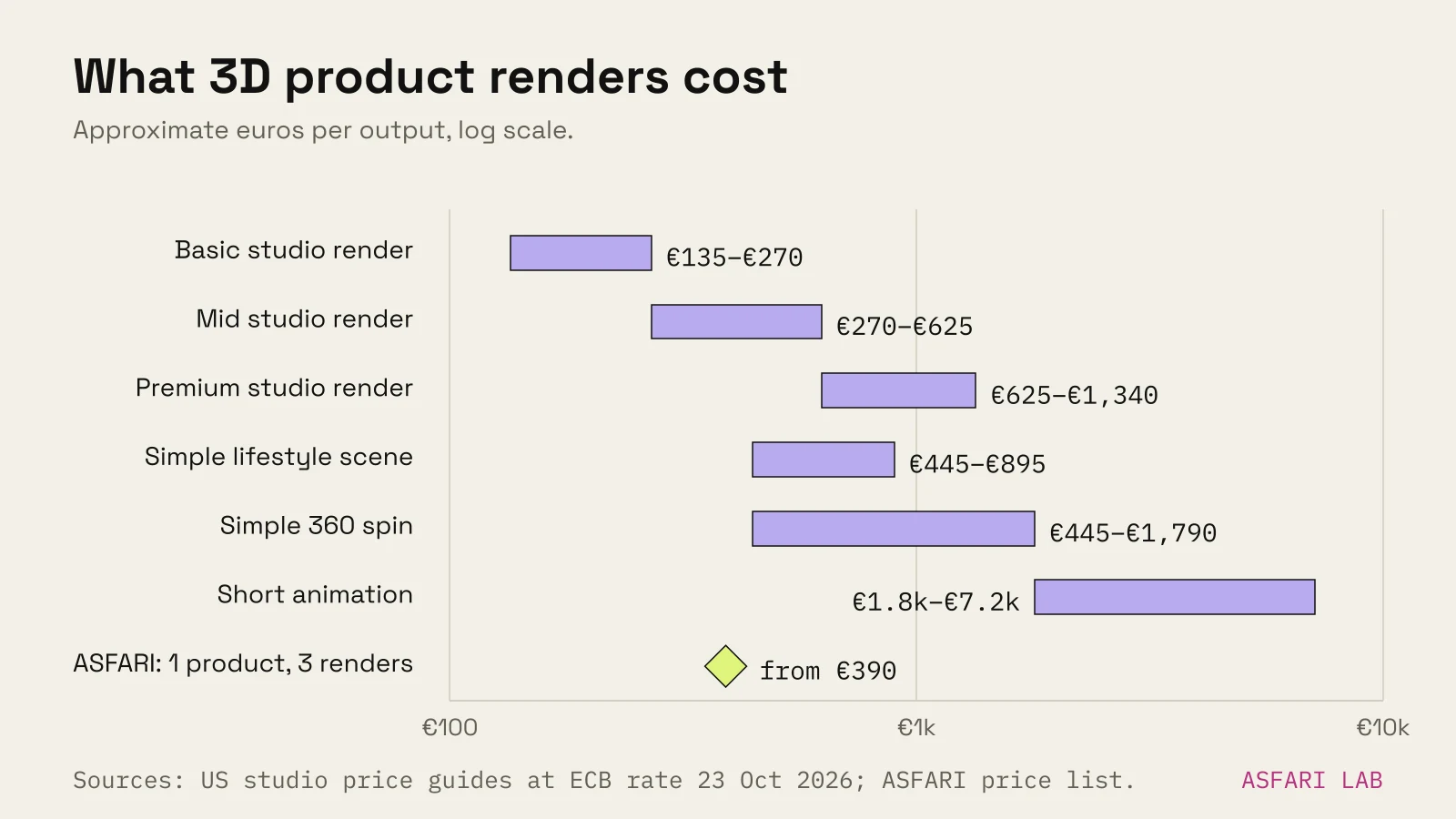
A single studio-quality 3D product render costs roughly €135 to €1,340 in 2026, based on published market rates. Lifestyle scenes, exploded views and animation cost more.
That range is wide because you are not really paying per image. You are paying for a 3D model, then for each image you take from it. The model is the expensive part. Once it exists, extra angles and colours get cheap.
Our own 3D product renders start at €390 (excl. VAT) for one product modelled in 3D, three finished renders and two rounds of feedback.
3D rendering prices: market ranges for 2026
Most published price lists are in US dollars. We converted them at the European Central Bank reference rate of 23 October 2026 ($1.1193 per €1) and rounded. Treat the euro figures as approximate.
| What you order | Market range (USD) | Approx. in € | Source |
|---|---|---|---|
| Basic studio render, freelancer | $150–300 | €135–270 | CADCrowd, 2026 |
| Studio render, mid-level studio | $300–700 | €270–625 | CADCrowd, 2026 |
| Premium photoreal studio render | $700–1,500 | €625–1,340 | CADCrowd, 2026 |
| Simple lifestyle scene | $500–1,000 | €445–895 | CADCrowd, 2026 |
| Mid-level lifestyle scene | $1,000–3,000 | €895–2,680 | CADCrowd, 2026 |
| Simple exploded view | $400–1,000 | €355–895 | CADCrowd, 2026 |
| Simple 360 spin | $500–2,000 | €445–1,790 | CADCrowd, 2026 |
| Short product animation | $2,000–8,000 | €1,790–7,150 | CADCrowd, 2026 |
| Product family in many colourways | $1,200–3,500 | €1,070–3,125 | Maverick Frame, 2026 |
For furniture, one London studio lists white-background packshots from $80–150 per image and styled lifestyle scenes from $300–500. Extra colourways of an already-modelled product cost 20–40% of the first image.
What drives 3D product rendering cost
1. Modelling vs rendering
Modelling is building the product in 3D. Rendering is lighting it and making the image. Frame Sixty, a US studio, says modelling labour, not render time, drives most of the cost. A production-ready product model typically costs $150–1,500 (about €135–1,340) on its own, according to one 2026 developer estimate.
2. Whether CAD files exist
If your product was designed in CAD, the shape already exists. One studio says clean CAD files cut modelling time by 35–50%. Without CAD, the artist rebuilds it from photos and measurements. That works fine, it just takes longer.
3. Materials
Matte plastic is quick. Glass, liquid, chrome, brushed metal, fabric weave and skin-like finishes are slow. They need careful light and many test renders. That is why a perfume bottle or serum dropper sits higher than a plastic box. Maverick Frame lists simple matte products at $150–400 and reflective or translucent ones at $500–900 per item.
4. Variants
Each colour or finish needs its own material and a check. But it reuses the model, light and camera. The tenth colourway costs a fraction of the first.
5. Scene and styling
A white or plain background is the cheapest. A lifestyle scene needs a room, props and styling, all built in 3D. On CADCrowd's ranges, a simple lifestyle scene costs two to three times a basic studio render.
6. Motion
A turntable spin is the easy step up. A designed animation with camera moves, an exploded sequence or liquid simulation is a small film. See product animation for those formats and costs.
What our work shows
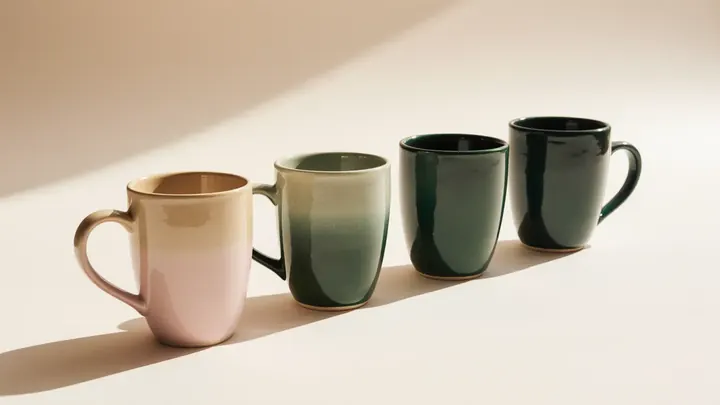
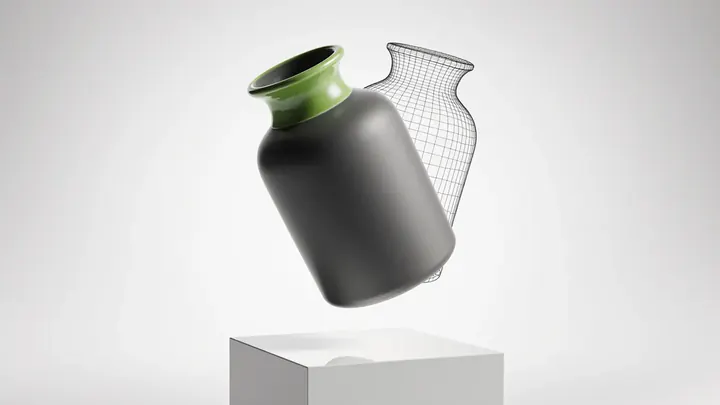
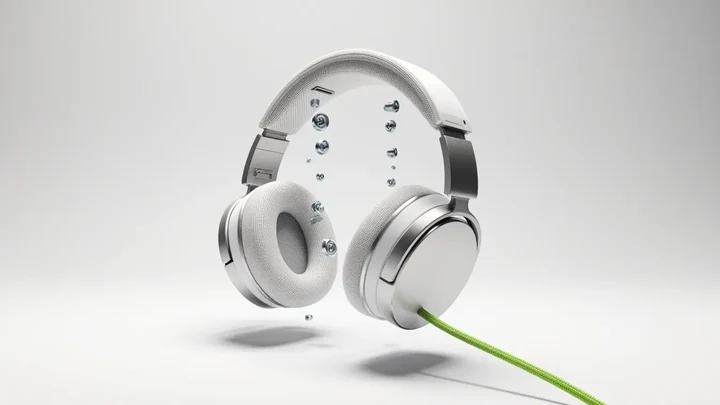
These are renders made in our lab, so you can see what each driver looks like in practice.
- Perfume hero. Glass, liquid and a metal cap. Materials drive the cost here, not the shape.
- Exploded sneaker. Every layer modelled separately so it can come apart. Exploded views take more modelling but explain a product in one frame.
- Serum bottle. Translucent glass and a dropper. Fast to model, slow to light.
- Headphones. Many parts, soft cushions and metal. A good test of mixed materials.
The same models can make 3D loops for social and a 3D viewer on a shop page.
Why the model is the asset, not the image
A photo is finished when the shoot ends. A 3D model keeps working.
From one model you can make: - clean shop images on white for marketplaces; - every colourway, including ones not yet produced; - lifestyle scenes for ads, without a location; - exploded and cut-away views; - a 360 spin or short animation; - a GLB file for a 3D viewer or AR on your shop (see 3D renders for Amazon and Shopify).
That is why 3D gets cheaper per image the more you use it. It is also why a cheap model that can't be reused is a false saving. Ask who owns the model file, and whether you get it. We cover the bigger picture in 3D product visualization, and the advertising side in CGI product ads.
If you are deciding between renders and a shoot, read product photography cost. The short version: photography is often cheaper for a single product shot once. 3D wins with variants, unreleased products and reuse.
How to get an accurate quote
Send these with your request and the quote will be faster and tighter:
- Photos of the product from all sides, in good light.
- Exact measurements, ideally with a drawing.
- CAD or 3D files, if you have them (STEP, OBJ, FBX or similar).
- Material references: finish samples, Pantone or RAL codes, or a physical sample.
- The list of images you need: angles, colours, backgrounds, formats (square for Amazon, 4:5 for feeds and so on).
- Whether you need motion now or later, so the model is built for it.
Ask every studio the same three questions: how many revision rounds, who owns the model, and what each extra image costs once the model exists.
3D rendering cost per view: a worked example
Here is how the maths usually looks. Say you sell one bottle in four colours, and you need a front, a three-quarter and a detail of each. That is 12 images.
If every image were priced like a first render, at CADCrowd's mid-studio range of $300–700, you would pay about €3,200–7,500. Nobody should quote it that way.
What usually happens is different. The first image carries the modelling. The other angles reuse the model and light, so they cost much less. The other colours reuse everything except the material. Maverick Frame's furniture list prices extra colourways at 20–40% of the first image.
So the real question to ask a studio is not "what is your price per image?" It is:
- what does the model cost;
- what does the first finished render cost;
- what does each extra angle cost;
- what does each extra colour cost.
Put those four numbers side by side and quotes become easy to compare. Our €390 starting price follows the same logic: it covers the model and three finished renders, for example a hero, a detail and a colour variant.
Freelancer or studio?
Frame Sixty's 2026 table puts freelancers at $50–500 per product still (about €45–445) and studios at $250–1,200 (about €225–1,070). The gap is mostly materials and lighting skill, consistency across a range, and whether someone manages the project. For a single matte product, a good freelancer is fine. For glass, liquid or a range of 30 products that must match, pay for the process.